Mobile Action On The Best UFC Betting Apps UK
 Available in US
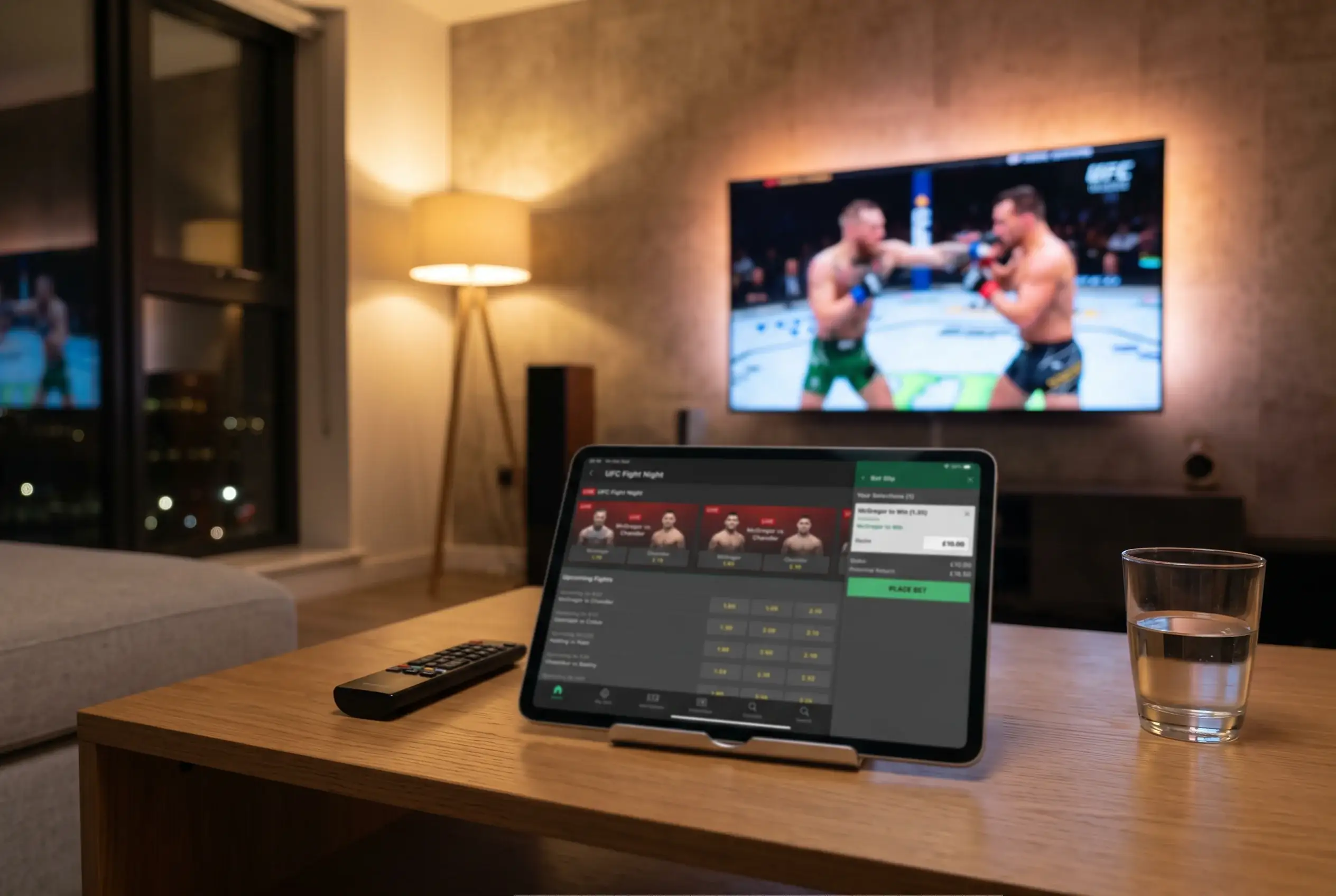
I downloaded my first UFC betting app in 2018, and it crashed twice during the main event. The odds froze, the bet slip vanished, and by the time the app recovered, the fight was over. That experience taught me something that no review site ever mentions: the best app is not the one with the slickest design or the biggest welcome offer. It is the one that works when it matters — at half past three in the morning during a pay-per-view card when every server is under load.
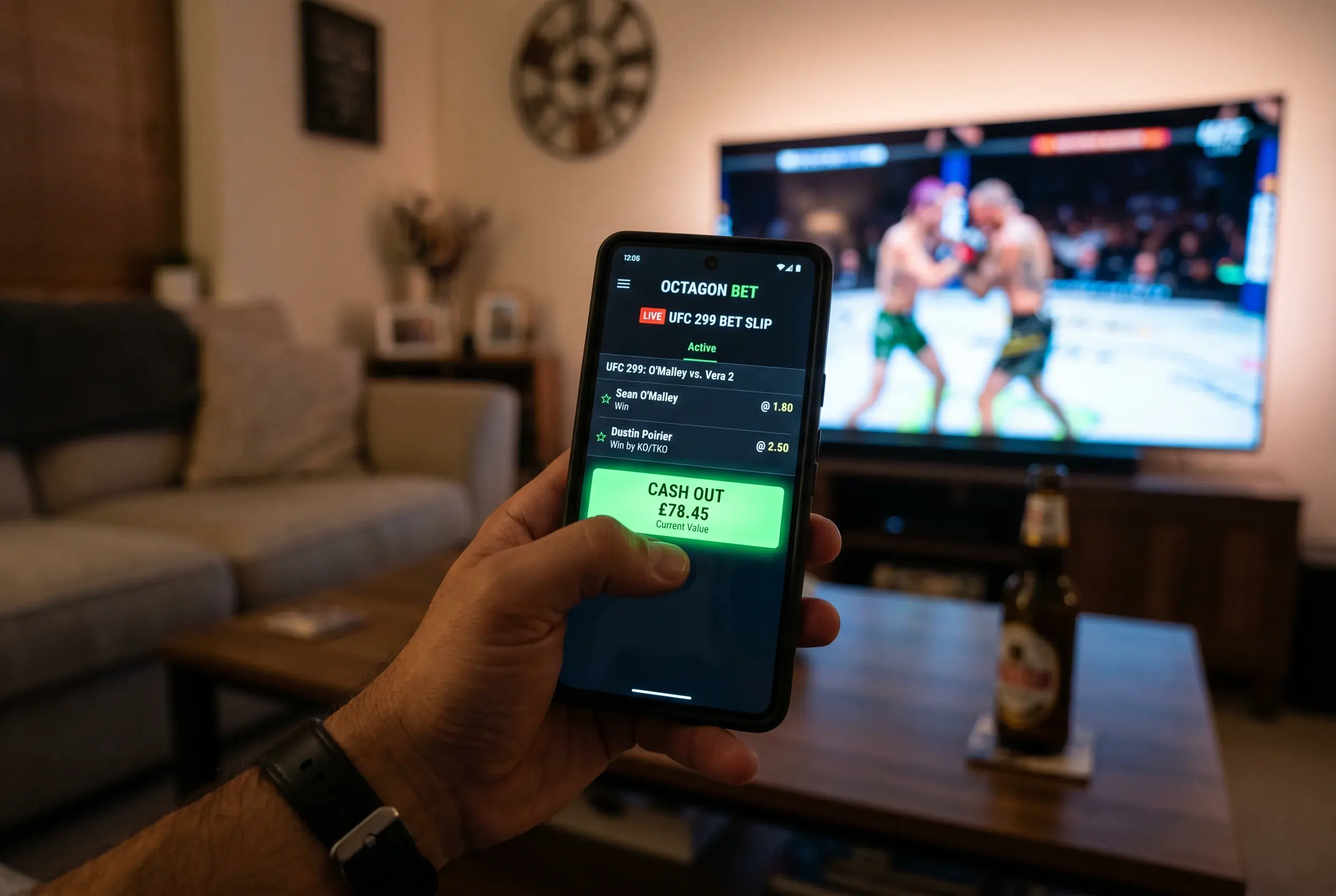
Mobile devices now process 80% of all online bets globally, and UFC fight nights push that number even higher. UK cards typically air late on Saturday evenings, which means the vast majority of punters are betting from their phones while watching from the sofa. The app you choose becomes your entire betting infrastructure for those hours — your odds feed, your bet slip, your cash-out button, your live market access. Getting that choice wrong means missed bets, stale prices, and a worse experience than you would have had on a desktop. This guide evaluates the apps that actually serve UK UFC bettors, tested across real fight cards, with honest assessments of what works and what does not.
Table of Contents
Core Features of High-Performing Mobile Platforms
Last year I spent a full UFC card switching between four different sportsbook apps, running a personal benchmark. I tracked five things: time to open the app and reach the UFC section, odds refresh speed during live fights, bet placement speed from slip to confirmation, market range for undercard bouts, and whether the app crashed or froze at any point during a high-traffic main event. The results surprised me. The app with the highest user rating on the App Store scored worst on live odds speed. The one with the clunkiest design had the fastest bet execution. Looks and performance do not correlate.
The 95% of UK online gambling that takes place from home is dominated by mobile, and within the 18-to-24 demographic, 76% use phones as their primary gambling device. For UFC specifically, the late-night scheduling of most cards means desktop usage drops even further. Your app is not a secondary interface — it is the primary one. What separates a good UFC betting app from a great one comes down to five measurable factors that have nothing to do with branding or colour schemes.
Navigation speed is the first. A UFC card might have twelve fights, and you need to find a specific bout within seconds. Apps that bury MMA under a generic “Other Sports” category or require three taps to reach UFC markets lose you time on every single interaction. The best apps surface UFC as a primary sport during fight week and offer direct links to the current card from the home screen.
Odds refresh rate is the second. During live fights, your app needs to show you a price that reflects reality, not a number that was accurate thirty seconds ago. Apps that refresh every five seconds give you a working view; those that refresh every fifteen or more show you a fiction. The third factor is bet slip stability — how reliably the app processes your bet without errors, timeouts, or price changes between tap and confirmation. The fourth is market depth: does the app offer method of victory, round betting, and prop markets on UFC, or is it moneyline only? The fifth is uptime under load: does the app hold together during a major numbered event when hundreds of thousands of users are online simultaneously?
Everything else — design, promotional banners, loyalty programmes — is noise. Those five factors determine whether your app helps you or hinders you on fight night.
One thing I have noticed across nine years of UFC betting: the punters who complain most about their apps are the ones who chose based on a welcome offer rather than performance. A generous sign-up bonus means nothing if the app cannot reliably place your bet at the price you tapped. Start with function, and let the promotions be a secondary consideration rather than the deciding factor.
UK UFC Betting Apps Ranked by Performance and Features
Ranking apps is dangerous territory. The moment you put a numbered list on a page, every operator wants to be number one and every reader expects definitive answers. I am not going to pretend that my testing across a season of UFC cards is a laboratory-grade study. What it is, though, is real-world data from a punter who uses these apps for their actual purpose — placing bets on UFC fights from a phone in the UK — and who has no financial relationship with any sportsbook.
The UK sportsbook market is dominated by a handful of large operators. Flutter Entertainment — the parent company behind several major brands — reported $15.91 billion in revenue in 2025, up 17% year on year, with an EBITDA of $2.85 billion. That scale translates directly into app quality because Flutter and its peers invest the most development resources, the fastest bug fixes, and the deepest market coverage into their mobile platforms. The apps backed by the largest operators consistently score highest on my five-factor test — not because big is inherently better, but because maintaining a high-performance mobile betting platform requires infrastructure spending that smaller operators cannot match.
The top-performing apps for UFC in the UK share several characteristics. They load the UFC section within one tap from the home screen during fight week. They offer at least five market types per main card fight — moneyline, method of victory, total rounds, round betting, and fight props. They maintain live odds refresh rates under ten seconds during active bouts. And they hold up under the server load of a major numbered event without crashing, freezing, or producing bet placement errors.
Mid-tier apps — typically from medium-sized operators — tend to deliver solid pre-fight functionality but fall short on live market depth and speed. They cover UFC adequately for casual pre-fight betting but lack the specialist MMA trading infrastructure to offer deep in-play markets or fast refresh rates. For a punter who places one or two pre-fight bets per card, these apps work fine. For anyone who bets live or uses method of victory and round markets, the difference in experience is noticeable.
The weakest category includes apps from operators who treat UFC as an afterthought. MMA appears under a generic “Other Sports” or “Combat Sports” umbrella, market coverage is limited to moneyline and sometimes total rounds, and live betting on UFC is either absent or so slow that it is functionally useless. These apps exist because the operator offers UFC markets on desktop and the app simply mirrors whatever is available — no optimisation, no priority, no dedicated MMA trading input. If your app does not list UFC on the main sports menu during fight week, it is telling you exactly how much attention it pays to combat sports.
One pattern I have observed across three years of app testing: operator size correlates with UFC app quality, but it is not a perfect relationship. A few mid-tier operators with a genuine focus on combat sports outperform larger rivals that spread their development resources across twenty sports. The key signal is whether the operator has a dedicated MMA trading team or simply feeds UFC odds through a generic third-party model.
Something worth noting about the current UK market landscape: the number of physical bookmaker shops has dropped to 5,931 — a decline of 22.8% from pre-pandemic levels. That contraction has pushed betting activity online and onto mobile at an accelerating pace. For UFC specifically, which was never well served by high street shops anyway, the shift means the app is now the default interface for the overwhelming majority of UK MMA bettors. The operators investing most heavily in their mobile platforms are the ones positioning themselves for where the market is going, not where it has been.
My practical advice: download and test at least three apps from different operators before committing your primary bankroll to one platform. Place a small pre-fight bet on a Fight Night card through each one. Then use each app during the live portion of the same card and compare the experience directly. The differences in speed, market coverage, and interface responsiveness become obvious when you experience them side by side on the same event rather than evaluating each app in isolation on different nights.
Live Odds Refresh Rates: How Fast Each App Updates
During UFC 300, I ran a side-by-side comparison of three apps with a screen recorder. One app updated live odds every four to six seconds. Another refreshed every twelve to fifteen. The third froze entirely for nearly a minute during the co-main event — the odds simply stopped moving while the fight continued. The frozen app eventually caught up, jumping directly from pre-knockdown prices to post-knockdown prices in a single snap, which made it impossible to act on any of the interim price movements.
Live odds speed is driven by two technical layers: the data feed from the sportsbook’s trading engine to the app, and the app’s rendering speed in displaying the updated numbers on your screen. In-play betting already accounts for 62.35% of online sports betting revenue globally, and that proportion continues to grow. Sportsbooks that invest in low-latency data pipelines and efficient mobile rendering gain a competitive advantage because their users can act on price changes faster than those on slower platforms.
The practical consequence for you is straightforward: if your app is slow to update live odds, you are consistently seeing stale prices. When you tap a bet at 1.85 and the app returns a “price change” notification adjusting to 1.70, the platform has already moved past the number you intended to bet on. That friction is not just annoying — it systematically degrades your expected return on live bets. Every rejected bet at a better price is a missed opportunity, and over a full season of UFC cards those missed opportunities accumulate into a measurable cost.
Testing refresh speed is simple. Open the app during any live UFC fight and watch the moneyline price. Count the seconds between visible changes. If the number updates every five to eight seconds during active exchanges, the app is performing well. If it sits static for twenty seconds or more while fighters are engaged, the feed is lagging. Do this test on a Fight Night card — lower traffic, fewer variables — before relying on the app during a major numbered event.
App-Only Features: Bet Builders, Notifications, and Quick Bets
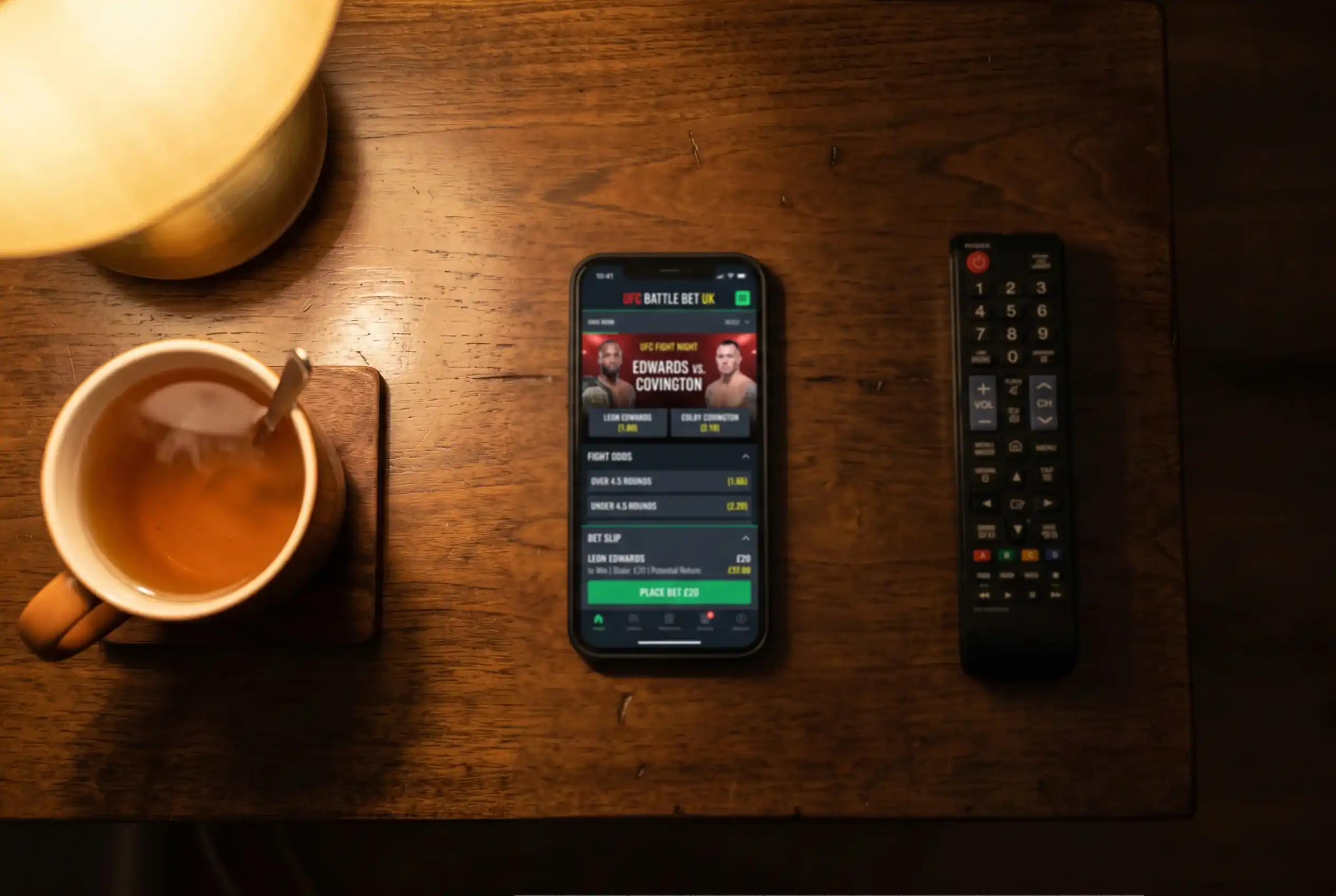
Bet builders changed how I approach UFC cards. Before they existed on mobile, combining multiple outcomes on a single fight required separate bets with separate stakes. Now I can stack “Fighter A to win by KO/TKO in rounds 1-2” into a single wager from my phone in under thirty seconds. The feature is not available on every UK app, and the implementation varies enormously between those that offer it.
The best UFC bet builder implementations let you combine at least four selection types: fight winner, method of victory, round groupings, and fight-to-go-the-distance. Some platforms extend this to include significant strikes or takedown totals, though these props are rarer on MMA than on football or basketball. The key technical detail is correlation handling — how the app adjusts the combined odds when your selections are not independent. Picking “Fighter A by KO” and “fight to end in round 1” are heavily correlated, and a well-built bet builder prices that correlation into the combined odds rather than offering an artificially inflated payout.
Push notifications represent the most undervalued app feature for UFC bettors. Fight cards change constantly — bouts get pulled, replacements step in, weigh-in results shift the market. An app that sends a timely notification about a last-minute opponent change gives you a window to reassess your pre-fight positions before the market fully adjusts. Not all apps offer UFC-specific notification options; many lump MMA under a general “sports alerts” category that buries fight-relevant updates in a stream of football scores.
Quick bet features — one-tap wager placement at a pre-set stake — serve live bettors who need to act in seconds during a fight. The feature bypasses the traditional bet slip flow and places the wager immediately when you tap the odds. It is a double-edged tool: faster execution, but no confirmation step to catch mistakes. I use it exclusively for live moneyline bets where speed matters and the risk of a misclick is low. For more complex bets, the standard bet slip remains the safer route.
Streaming integration is an emerging feature that a growing number of UK apps now offer for UFC. Being able to watch a fight within the same app where you place your bets eliminates the need to switch between screens — a small convenience that becomes significant when you are trying to place a live bet based on something you just saw happen. Not all apps that list streaming actually provide reliable UFC coverage, so verify availability for specific events before relying on it as your primary viewing method. The fight itself is the data source for live betting decisions, and any friction between watching and wagering works against you.
App Security and UKGC Licensing Verification
A punter I know downloaded a UFC betting app from a link in a Telegram group last year. It looked professional — clean interface, competitive odds, instant deposits. It was also completely unlicensed. He found out when he tried to withdraw his first win and the app simply stopped responding. No customer service, no complaint process, no recourse. That money is gone.
Every legitimate UFC betting app available to UK users must hold an active licence from the UK Gambling Commission. The UKGC sent over 480 cease-and-desist notices to unlicensed operators in the current financial year and blocked 504 illegal gambling sites. Andrew Rhodes, then the UKGC’s CEO, stated that any operator of significant size that lacks well-developed policies, procedures, and intervention systems is increasingly an outlier in the regulated UK market. That is a polite way of saying the Commission is actively hunting down operators who skip the rules, and the apps those operators produce are the most common vector for consumer harm.
Verifying an app’s licence takes thirty seconds. Every UKGC-licensed operator displays a licence number in the app’s footer or “About” section. You can cross-reference that number on the Gambling Commission’s public register, which confirms whether the licence is active, suspended, or revoked. If the app does not display a licence number, or if the number does not appear on the UKGC register, do not deposit money. It is that simple.
Beyond licensing, app security covers data encryption, payment processing, and identity verification. Licensed apps are required to use encrypted connections for all financial transactions and to verify your identity before allowing withdrawals — a process called Know Your Customer. These checks feel intrusive, but they exist to prevent fraud and money laundering. An app that lets you deposit and withdraw without any identity verification is almost certainly operating outside UKGC oversight.
The Commission has also transmitted more than 102,000 URLs to Google for removal, with 64,000 taken down and 264 illegal gambling sites shut down entirely. That enforcement activity targets the websites and apps that try to reach UK consumers without holding a valid licence. The scale of the effort tells you something about the size of the unlicensed market — it is large enough to warrant industrial-level enforcement. For you as a punter, the lesson is simple: stick to apps from operators listed on the UKGC register, and treat any app that arrives via social media links, Telegram groups, or unsolicited messages as a risk not worth taking. For more detail on the licensing framework and how to verify operators, see our guide to UKGC-licensed UFC betting.
Frequently Asked Questions
Are UFC betting apps safe to use in the UK?
Yes, provided the app is operated by a UK Gambling Commission-licensed company. You can verify any operator’s licence status on the UKGC public register by searching their licence number, which should be displayed in the app’s footer or settings. Avoid apps that do not display a licence number or that were downloaded from sources outside the official App Store or Google Play.
Which UFC betting app has the best bet builder?
The apps backed by the largest UK operators tend to offer the most developed UFC bet builders, allowing you to combine fight winner, method of victory, round groupings, and sometimes prop selections on a single bout. The quality of the bet builder depends on how well the app handles correlation between selections and how many combination types it supports for MMA specifically.
Can I claim welcome bonuses through a UFC betting app?
Yes. Welcome bonuses offered by UK-licensed sportsbooks apply regardless of whether you register through the app or the desktop site. Terms and conditions — wagering requirements, minimum odds, and eligible markets — are identical across both platforms. Some operators occasionally run app-exclusive promotions, but these are typically short-term offers rather than permanent features.
Prepared by the ufc Betting Website editorial staff.