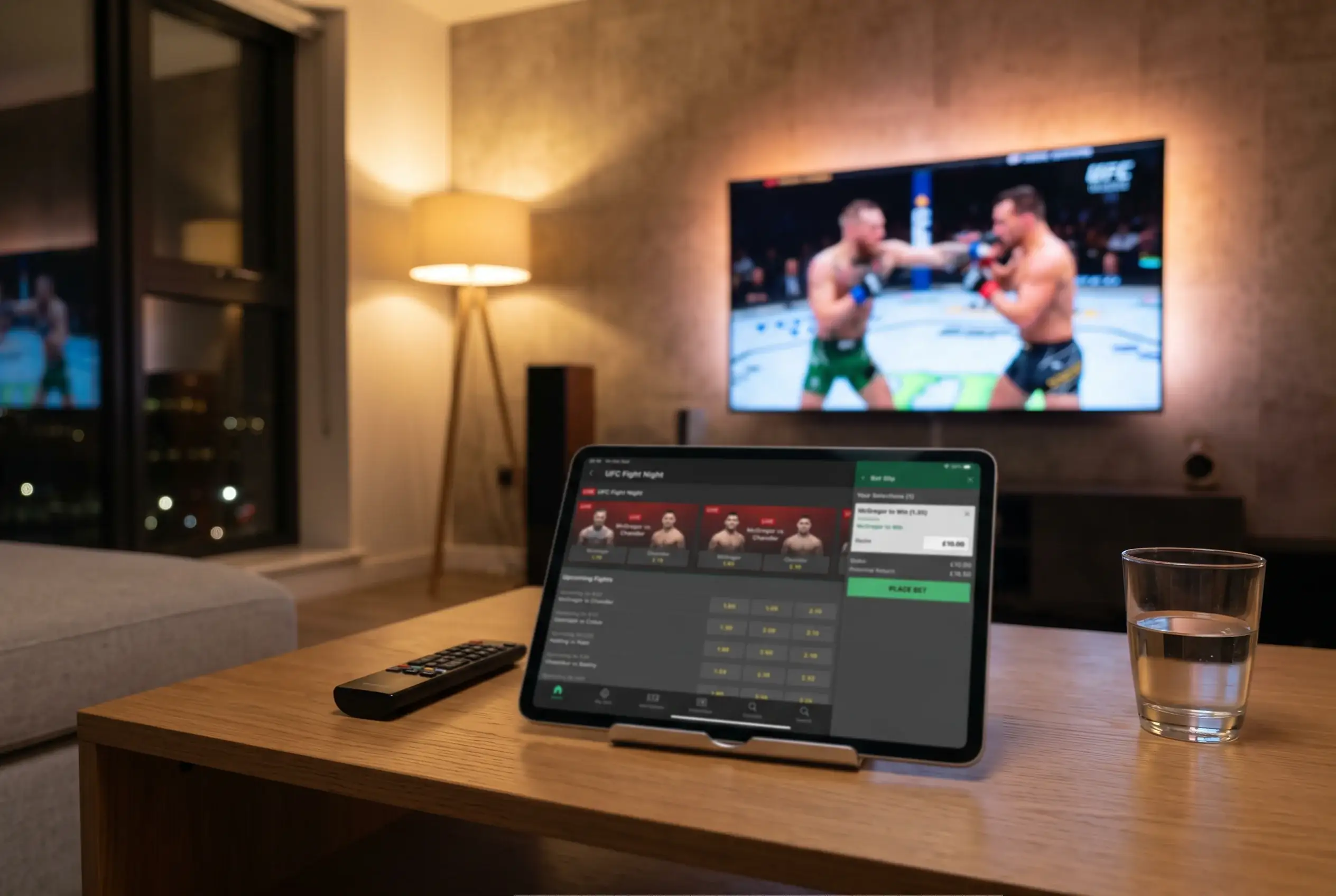
Data-Driven Edge With UFC Betting Strategy
 Available in US

I spent the first two years of my UFC betting career doing what everyone does — watching a fight card preview, picking the fighter I “felt” was going to win, and placing the bet. My record was mediocre. I won slightly more than half my bets but lost money overall because I kept backing heavy favourites at short prices, and every upset wiped out weeks of marginal gains. The turnaround came when I stopped asking “who wins this fight?” and started asking “what does the data say about this matchup that the odds have not priced in?”
The MMA betting handle reached $10.3 billion in 2024, climbing 17% year on year. That growth has attracted sharper money, better models, and tighter lines — which means the casual approach of picking winners by instinct is less viable now than it has ever been. Strategy is not a luxury for serious UFC bettors; it is the baseline requirement for not donating your bankroll to the sportsbooks. What follows is the framework I have built over nine years, grounded in fighter data, bankroll discipline, and the structural quirks of UFC events that most punters overlook.
A profitable approach relies heavily on analyzing key UFC fighter statistics such as striking accuracy and takedown defense.
Table of Contents
- Fighter Metrics Proven to Predict Betting Outcomes
- Weight Cuts and Late Replacements: The Hidden Variables
- Bankroll Management for UFC Betting
- Main Card vs. Prelims: Where the Value Sits
- The Biggest Trap in UFC Betting: Overthinking Single Fights
- Building a Sustainable Long-Term UFC Betting Approach
- Frequently Asked Questions
Fighter Metrics Proven to Predict Betting Outcomes
Back in 2020, I started building a spreadsheet for every UFC fight I bet on. I tracked every metric I could find — height, reach, age, camp, record, finishing rate, striking volume, takedown numbers — and ran basic correlations against outcomes. Most of those metrics turned out to be noise. Five did not. These are the five I still use as the foundation of every pre-fight assessment, and they have held up across hundreds of bouts.
Striking differential per minute is the first. This is not total strikes thrown — it is the difference between significant strikes landed and significant strikes absorbed, normalised per minute of octagon time. A fighter who lands 4.5 significant strikes per minute but absorbs 4.0 has a differential of +0.5. That number tells you more about effective striking than raw volume because it accounts for defence. Fighters with a consistent positive differential of +1.0 or better tend to control the stand-up exchanges that judges score, and they tend to stay healthier through the later rounds.
Takedown accuracy versus the opponent’s takedown defence is the second metric, and it is the single best predictor of round control in any fight that hits the mat. A wrestler with 55% takedown accuracy facing a fighter with 80% takedown defence creates a specific tension: can the wrestler overcome elite defence, and how much energy will the attempts cost? I look for mismatches where the gap between one fighter’s offensive accuracy and the other’s defensive rate exceeds twenty percentage points. Those mismatches tend to dictate the fight’s location — standing or grounded — and location is what determines which fighter’s skill set gets expressed.
Significant strike absorption rate is the third. This measures how many clean shots a fighter takes per minute. A low absorption rate — below 2.5 per minute across a career — indicates strong defensive skills, head movement, and distance management. High absorption fighters can still win, but they are more vulnerable to accumulation damage in later rounds and more likely to be stopped by a single clean shot in the early exchanges. When I see a fighter with a high absorption rate matched against a power striker, the method of victory market becomes interesting.
Finishing rate in recent bouts — not career-wide, but over the last five fights — is the fourth metric. UFC runs 42 to 43 events per year, and fighters evolve constantly. A career finishing rate from a fighter’s first professional bout through their twentieth tells you about their history, but their last five fights tell you about their current capabilities. A fighter who has gone to decision in four of their last five bouts after a career full of early stoppages may have lost power, changed strategy, or moved to a weight class where finishes are harder to come by. That shift directly affects how you approach method of victory and round markets.
Historical performance at the specific weight class is the fifth and most overlooked metric. Fighters who move up or down in weight carry their skills but not always their physical advantages. A knockout artist who moves from welterweight to middleweight faces opponents with thicker necks, heavier bones, and greater ability to absorb damage. The reverse — a fighter cutting down — may have speed advantages but compromised cardio if the weight cut is severe. I track each fighter’s record at their current weight class separately from their overall record, and the divergence is sometimes striking.
These five metrics do not guarantee a winner. What they do is give you a structured framework for comparing fighters that is grounded in measurable performance rather than narrative, reputation, or social media hype. For a deeper dive into how UFC fighter statistics translate into betting value, the numbers get even more granular.
Weight Cuts and Late Replacements: The Hidden Variables
One of the most profitable bets I ever placed was on a short-notice replacement who stepped in three weeks before the fight. The favourite had trained for a completely different opponent — a southpaw wrestler — and suddenly faced an orthodox striker with a six-inch reach advantage. The market barely moved. The favourite remained at 1.35, and the replacement opened at 3.20. The replacement won by TKO in round two. That fight crystallised something I already suspected: the hidden variables in UFC — weight cuts, late replacements, undisclosed injuries — create pricing errors that pure statistical models miss.
Weight cutting is the most predictable of these hidden variables because it follows patterns. A fighter who has missed weight in the past is more likely to miss again. A fighter moving down a weight class for the first time faces a cut they have never tested in competition. The physical consequences of a bad cut — compromised cardio, reduced chin durability, slower reaction times — are measurable in fight performance. When a fighter looks visibly drawn at the weigh-in, the market sometimes adjusts, but rarely by enough. The ceremonial weigh-in photos and footage that circulate on social media the day before the fight are free data that the sportsbook’s algorithm may not fully incorporate into the opening line.
Dana White himself has spoken bluntly about how integrity monitoring intersects with these variables. After a fight was pulled from a card following an alert from the betting integrity service, White told reporters he received the call and decided to remove the bout rather than let it proceed under suspicion. That willingness to act on integrity flags protects the sport, but it also creates last-minute card changes that cascade into the betting market. A pulled fight means the co-main event becomes the headliner, which changes the round structure for that bout from three rounds to five, which shifts every round-dependent market and sometimes moves the moneyline as well.
Late replacements are the second hidden variable, and they are more common than casual fans realise. UFC events average one to two fight changes per card in the final month before the event. Each change resets the matchup dynamics, but the market response is inconsistent. Sometimes the replacement opens as a significant underdog because they are unranked and unfamiliar. Other times the replacement comes in with a stylistic advantage over the original opponent that the market undervalues because the public perception focuses on ranking and name recognition rather than matchup-specific analysis. Tracking replacement patterns — which fighters accept short-notice bouts, how they perform historically on short preparation, and what stylistic shifts the new matchup creates — is one of the few genuine edges available to a diligent UFC bettor.
Bankroll Management for UFC Betting
The moment I started treating my UFC betting bankroll as a fixed asset rather than spending money, my results changed. Not because my picks improved — they were already decent — but because I stopped making the catastrophic sizing errors that turned winning streaks into break-even months. Bankroll management is the least exciting topic in sports betting, and it is the one that determines whether you survive long enough for your edge to compound.
The foundation is simple: define a bankroll that you are prepared to lose entirely without affecting your life. This is not your savings, not your rent money, not your holiday fund. It is capital allocated specifically to UFC betting, and the moment it hits zero, you stop. In the UK, 48% of adults participate in some form of gambling, and 2.7% score at levels associated with problem gambling. Those numbers are a reminder that the line between recreational betting and harmful behaviour is real, and bankroll discipline is the primary tool that keeps you on the right side of it.
Once the bankroll is defined, stake sizing follows a percentage model. I use a flat 2% of my current bankroll per bet as the baseline, which means my stakes shrink after losses and grow after wins. On a one-thousand-pound bankroll, a single bet is twenty pounds. If the bankroll drops to eight hundred pounds after a bad card, the next bet drops to sixteen pounds. This self-adjusting mechanism prevents the death spiral where a punter chases losses with ever-larger stakes.
For bets where I have higher conviction — a clear value discrepancy backed by multiple metrics pointing in the same direction — I occasionally scale up to 3% or 4% of bankroll. I never exceed 5% on a single UFC bet, regardless of how confident I feel. The reason is mathematical, not emotional: even the best UFC betting models produce losing streaks of five to eight bets regularly, because MMA is inherently unpredictable. A 5% maximum stake means a five-bet losing streak costs 25% of your bankroll. A 10% stake on the same streak costs 50%. The second scenario is recoverable in theory but devastating in practice because it triggers the psychological pressure that leads to poor decisions on the next bet.
10% of the UK population participates in online sports betting, and the overwhelming majority do so without any formal bankroll management. That is not a criticism — it is simply an observation about why most recreational bettors lose over time. The edge in UFC betting is small, even for skilled analysts, and without disciplined sizing, variance eats it alive.
Apply these data-driven methods by registering with the leading UFC sportsbooks available to UK punters.
Main Card vs. Prelims: Where the Value Sits
Here is something that took me years to notice: the best value on a UFC card almost never sits on the main event. The main event attracts the most public money, the most media analysis, and the most sophisticated pricing from the sportsbook’s trading desk. It is the fight where the market is most efficient. The early prelims, by contrast, feature fighters with smaller public profiles, less media coverage, and significantly less betting volume — which means the sportsbook’s pricing models have fewer data inputs and less market correction from sharp money.
UFC runs 42 to 43 events per year, splitting them between numbered cards and Fight Night events. A numbered card typically features five main card fights, four preliminary bouts, and three to four early preliminary fights. Fight Night events are slightly leaner but follow a similar structure. The early prelim tier is where I find the most consistent pricing errors, because the fighters on these bouts are often recent signees, fighters returning from long layoffs, or competitors who have had fewer than ten UFC bouts. The data available to the sportsbook’s algorithm is thinner, which means the model relies more on generic MMA performance metrics and less on fighter-specific intelligence.
That said, early prelim betting carries its own risks. Lower-profile fighters are more unpredictable — their skill ceilings and floors are wider, and a single bad performance can look like a career pattern when the sample size is small. The upside is that when you do find genuine value on an undercard fight, the price tends to be more generous than an equivalent mispricing on the main card. The sportsbook has less exposure on undercard bouts and less incentive to fine-tune the price, so the value window stays open longer.
My approach: I assess every fight on a card, from the earliest prelim to the main event, using the same five-metric framework. Then I rank my confidence levels and only bet on the three or four fights where the gap between my estimated probability and the sportsbook’s implied probability exceeds my threshold. More often than not, at least two of those bets fall on the undercard. The main event makes it into my selection maybe once every three or four cards — and when it does, the edge is typically narrow.
The Biggest Trap in UFC Betting: Overthinking Single Fights
The single most destructive habit I see in UFC bettors — including in my own early track record — is pouring disproportionate energy and money into one fight. A main event between two ranked fighters generates hype, analysis, and the irresistible feeling that you have figured out the answer. You stack multiple bets on the same bout: moneyline, method of victory, round betting, maybe a prop or two. If you are right, it feels like genius. If you are wrong, one fight has just torpedoed your bankroll for the month.
The trap is cognitive as much as financial. The more time you spend analysing a single fight, the more confident you become in your conclusion, regardless of whether that confidence is warranted. This is a well-documented bias — information accumulation increases conviction faster than it increases accuracy. After reading ten articles, watching three breakdowns, and listening to two podcasts about a single bout, you feel certain. But the fight itself remains a two-person contest influenced by variables no amount of analysis can fully capture: who slept badly, who cut weight poorly, who has an undisclosed hand injury.
The fix is structural. I limit myself to one bet type per fight. If I like the moneyline, I do not also play the method of victory. If I think the fight goes the distance, I do not also bet the exact round. This rule forces diversification across a card rather than concentration on a single bout. It reduces the emotional attachment to any one outcome and keeps the bankroll insulated from the inevitable upsets that define MMA.
Building a Sustainable Long-Term UFC Betting Approach
Sustainable profit in UFC betting looks nothing like the screenshots you see on social media. There are no five-hundred-pound parlays that hit miraculously. No “locks of the night.” What there is, if you do this properly, is a slow, steady accumulation of small edges across dozens of events per year, punctuated by inevitable losing streaks that test your commitment to the process.
The global UFC market is projected at $1.74 billion in 2026 and growing toward $2.79 billion by 2033 at roughly 8% annually. The broader MMA market has roughly doubled since 2020, expanding from around $1.2 billion to $2.2 billion by 2025. That growth attracts institutional capital, better modelling, and sharper pricing from sportsbooks — which means the edges available to individual bettors are getting thinner. Adapting to that compression requires a long-term mindset and a willingness to evolve your methods alongside the market.
Three principles define a sustainable approach. The first is record-keeping. Every bet I place goes into a spreadsheet with the date, event, fight, market, odds, stake, and result. I also record my pre-fight probability estimate and the sportsbook’s implied probability at the time of placement. After every ten events, I review the data for patterns: am I overvaluing strikers? Underestimating grapplers at certain weight classes? Consistently misjudging three-round fights? Without this data, improvement is guesswork.
The second principle is specialisation. I do not bet on every weight class equally. Over nine years, I have developed the deepest knowledge in the lightweight and welterweight divisions, and my results in those divisions are materially better than in flyweight or heavyweight. Specialising narrows the range of fighters, styles, and matchup dynamics I need to track, which improves the quality of each assessment. A punter who tries to cover all twelve UFC weight classes with equal depth is spreading themselves too thin to maintain a genuine edge in any of them.
The third is emotional detachment. Losing streaks happen. I have had stretches of seven consecutive losing bets that made me question whether I had any skill at all. The only thing that kept me in the game was the historical data in my spreadsheet showing a positive return over the previous six months. Without that evidence, the emotional pull to change strategies, increase stakes, or quit entirely would have been overwhelming. The long-term approach works precisely because it is designed to survive the short-term variance that destroys reactive bettors. Every card is one data point. Every month is a small sample. The real picture only emerges over a full year or more of disciplined, documented betting.
Frequently Asked Questions
What are the most profitable UFC betting strategies?
The most consistently profitable UFC betting strategies are those built on fighter-specific data analysis rather than narrative or hype. Identifying value through implied probability gaps, specialising in specific weight classes, maintaining strict bankroll discipline with 2-3% stakes per bet, and focusing on undercard fights where sportsbook pricing is less efficient all contribute to long-term positive returns. No single strategy guarantees profit — the edge is small and requires disciplined execution over many events.
How do weight cuts affect UFC odds?
Weight cuts affect UFC odds indirectly. A fighter who misses weight, looks visibly drained at the weigh-in, or has a history of difficult cuts may see their odds lengthen as the market prices in the physical compromise. The effect is not always immediate — some line movement happens only after weigh-in footage circulates on social media. Severe weight cuts can impair cardio, reaction time, and chin durability, all of which affect fight outcomes.
Is it better to bet on main card or prelim fights?
From a value perspective, prelim and early prelim fights tend to offer more pricing inefficiencies because they receive less public attention, less media analysis, and lower betting volume. The sportsbook’s pricing model has fewer data inputs for lower-profile fighters, which creates wider gaps between implied probability and actual probability. Main card fights are more efficiently priced due to higher volume and sharper money in the market.
How much of my bankroll should I stake on a single UFC fight?
A flat 2% of your current bankroll per bet is a solid baseline for UFC betting. For higher-conviction bets backed by strong data, scaling up to 3-4% is reasonable. Exceeding 5% on any single bet introduces significant downside risk during losing streaks, which are a normal and expected part of MMA betting. The percentage should be based on your current bankroll, not your starting bankroll, so that stakes naturally decrease after losses and increase after wins.
Published by the ufc Betting Website team.