Championship Outrights For UFC Futures Betting
 Available in US
Most UFC bets settle in a single night. Futures are the opposite – you place your money and then wait, sometimes for months, for the outcome to resolve. I backed a lightweight contender to win the title at 12.00 in early 2023, and it took fourteen months and three fights before the bet settled. It lost, as it happens, but the process taught me more about patience and value identification than any single-fight wager ever has.
Futures betting means wagering on outcomes that will not be decided for weeks or months. In UFC terms, this usually means championship outrights – picking which fighter will hold a specific belt by a given date – though some sportsbooks also offer futures on fight-of-the-year awards, annual finish totals, or whether a specific superfight will happen within a calendar year. TKO Group Holdings, whose CEO Ariel Emanuel described 2025 as a year of “sustained momentum” with “long-term media rights agreements in place,” is running a promotion that generates 42-43 events annually, creating a continuous stream of data points that can shift futures odds dramatically.
Structuring UK UFC Futures Markets
Championship outright markets list every plausible contender in a weight division alongside their odds of holding the belt by the market’s settlement date. The current champion is almost always the favourite, with the price reflecting their probability of retaining the title through upcoming defences. Contenders are priced based on their ranking, their likelihood of getting a title shot, and their perceived chance of winning that shot if they get one. The UFC schedules roughly 13 numbered cards per year alongside 30 Fight Night events, and title fights appear on most numbered cards, which means the market is refreshed regularly.
The pricing cascades logically. A top-ranked contender who is already scheduled for a title fight might sit at 3.50, reflecting a roughly 28% implied probability. A fighter ranked fifth who needs two wins to earn a shot might be priced at 15.00 – a longer journey with more hurdles, but a vastly higher return if they get there. The further down the rankings you go, the longer the odds and the more things that need to break right.
Some sportsbooks offer division-level futures without specifying a settlement date. These “next champion” markets simply ask who will be the next person to win the belt, regardless of when that happens. The pricing is tighter because the question is simpler – you are not betting against a clock, just against the field – but the capital lockup is indefinite, which introduces its own kind of risk.
Available UFC Futures: Title Fights, Tournament of Champions, and More
Championship outrights are the bread and butter, but the menu is expanding. Some UK sportsbooks now offer futures on whether specific high-profile fights will take place within the year. Will a particular superfight happen in 2026? These are essentially yes/no propositions at variable odds, priced based on public statements, contract situations, and the sportsbook’s own intelligence.
Fighter-of-the-year and finish-of-the-year futures appear sporadically, usually toward the second half of the calendar year when enough data has accumulated for the market to be meaningful. These are low-liquidity novelty markets, but they can offer value if your view on the sport diverges from the general public’s. A dominant champion who has rattled off three spectacular finishes might be underpriced for fighter of the year if casual attention has been elsewhere.
The global UFC market is valued at $1.74 billion in 2026, and as that market grows, the diversity of futures offerings is likely to expand further. UK sportsbooks are already more creative with futures than they were even two years ago, and the trend points toward greater depth and more granular long-term markets across every division.
When to Place UFC Futures Bets for Maximum Value
Timing is everything with futures, and this is where I have developed the strongest conviction over my years of betting. The best value almost always exists in two windows: immediately after a title fight, and immediately after a contender’s stock-raising win.
After a title fight, the market resets. If the champion wins, the next challenger’s odds are recalculated based on their path to a shot. If there is an upset, the entire division reshuffles. In both cases, the sportsbook needs to reprice quickly, and those early post-fight prices often overshoot. A new champion’s odds to retain might be too short because of recency bias, while the former champion’s odds to regain the belt might be too long because punters are still processing the loss.
The post-win window for contenders is equally interesting. When a ranked fighter dominates a top-ten opponent, their championship odds shorten – but sometimes not fast enough. I have found value multiple times by backing a surging contender immediately after a statement win, before the market fully adjusts to their improved standing. The odds movement on futures is slower than on single-fight markets because the volume is lower, which creates these windows of opportunity.
Conversely, the worst time to bet futures is during fight week for a title bout. The hype cycle compresses odds, and the sportsbook adjusts aggressively as public money floods in. Prices that were generous two weeks ago become razor-thin. Patience is the futures bettor’s primary weapon.
Liquidity and Cancellation Risks in UFC Futures
Futures tie up your capital for extended periods, and that opportunity cost is real. A £50 futures bet at 10.00 locks away £50 that could have been deployed across dozens of single-fight wagers over the same months. If you are working with a limited bankroll, futures should represent only a small fraction of your total action – I keep mine under 10% of my overall betting budget.
Cancellation risk is the hidden tax on UFC futures. Fighters get injured, retire unexpectedly, or switch weight classes. If your futures pick suffers a serious injury and misses the next twelve months, your bet is frozen. Most sportsbooks will not void a futures bet due to injury – the market stays open, and your money stays locked. In a sport where training injuries and weight-cut complications are common, this risk is not trivial.
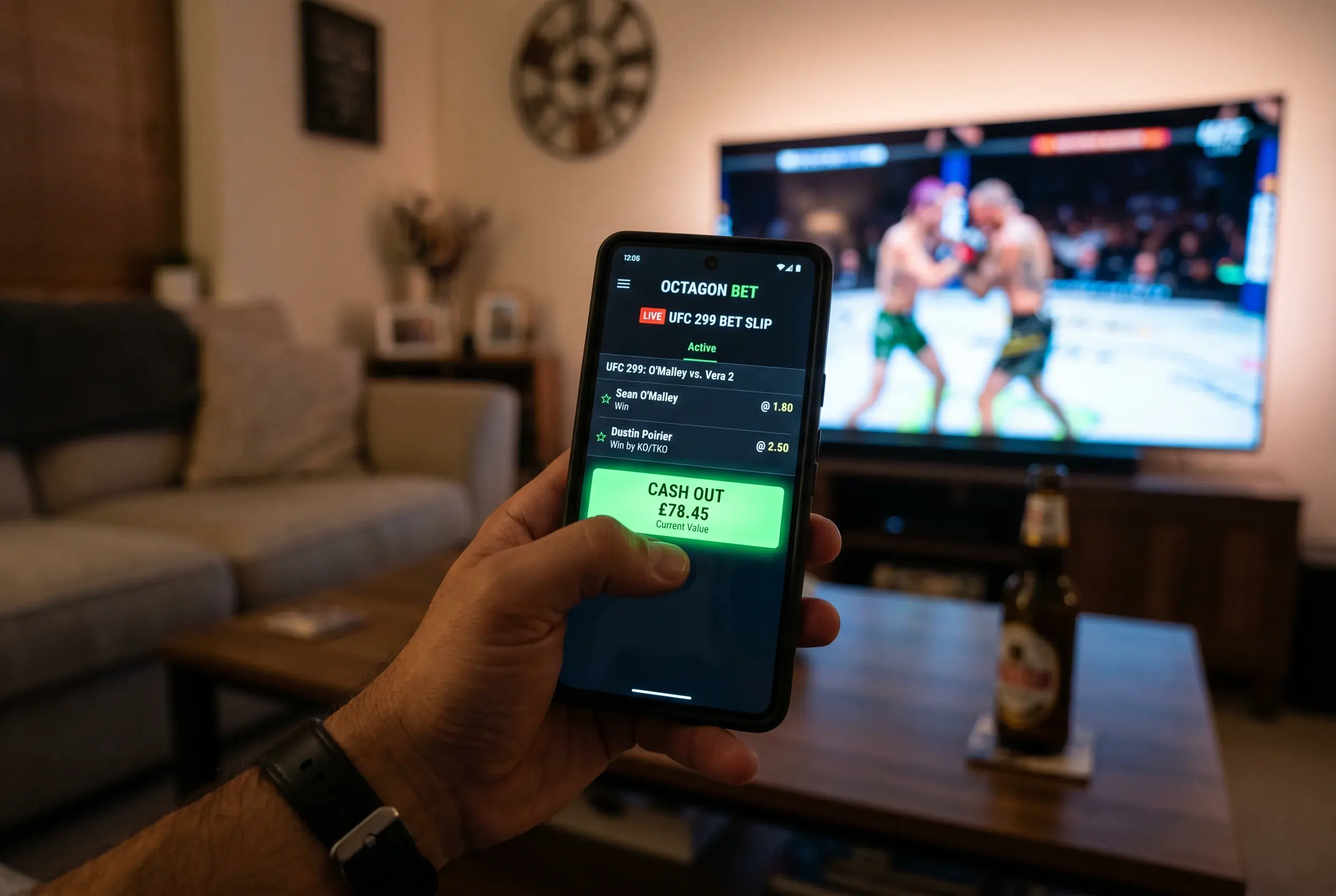
Cash out options on futures vary by sportsbook. Some platforms offer partial or full cash out as your selection’s odds shorten, letting you lock in profit before the market settles. Others offer no cash out at all on futures, meaning you ride the position to its conclusion regardless of what happens in between. Before placing a futures bet, check whether cash out is available – it can make the difference between a flexible position and a rigid one.
Can I cash out a UFC futures bet early?
Some UK sportsbooks offer cash out on UFC futures, allowing you to take a profit if your selection’s odds have shortened since you placed the bet. However, not all platforms provide this option for futures markets, so check before placing your wager. Cash out values are typically lower than the full potential payout.
What happens to a futures bet if a fighter is injured?
If a fighter is injured, your futures bet remains active in most cases. The sportsbook does not void the bet – the market stays open, and your selection’s odds may drift as their path to the title becomes less certain. Some platforms offer cash out in this situation, but others require you to hold the position until settlement.
Which UK sportsbooks offer UFC championship outrights?
Most major UK sportsbooks offer UFC championship outright markets for the more popular weight divisions. Availability varies – heavyweight and lightweight outrights are nearly universal, while smaller divisions like flyweight or strawweight may only appear on the larger platforms with broader UFC coverage.
Prepared by the ufc Betting Website editorial staff.