Real-Time Action With UFC Live Betting
 Available in US
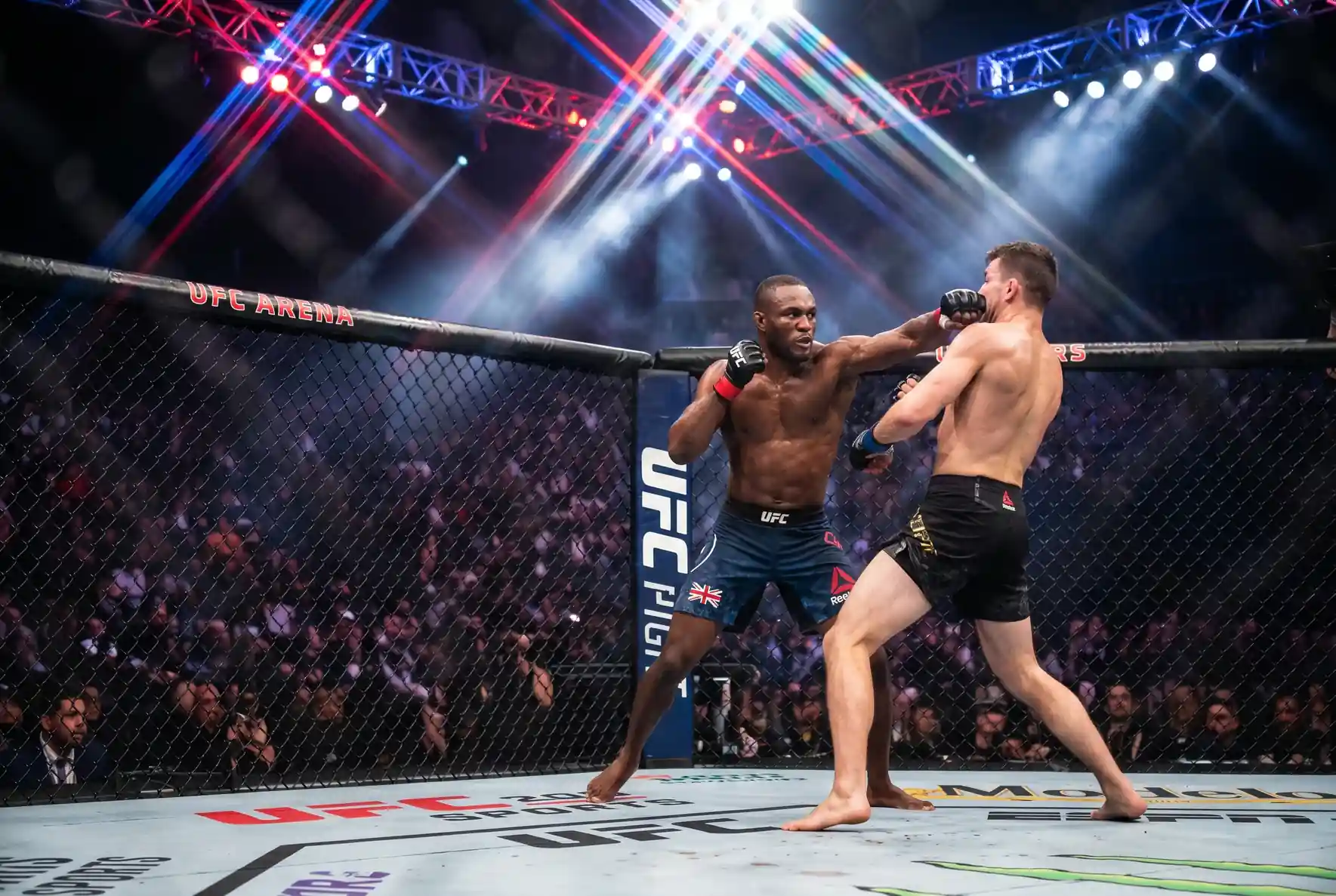
The first time I placed an in-play bet on a UFC fight, I hesitated for about fifteen seconds too long. The line I wanted was gone. A knockdown in round one had reshuffled everything, and by the time I tapped “confirm,” the price had moved three ticks against me. That fifteen-second lesson shaped how I approach live UFC betting to this day — speed is not optional, and hesitation has a price tag.
In-play betting has captured 62.35% of online sports betting revenue globally, and UFC is one of the sports where live wagering makes the most tactical sense. Fights are short, unpredictable, and full of momentum shifts that create new information every thirty seconds. A fighter who looks dominant in round one might gas in round two. A grappler who gets stuffed on three early takedown attempts might switch to a striking game plan that the pre-fight odds never priced in. Every round is a fresh data point, and the sportsbooks that serve UK punters are adjusting their markets in near real-time to reflect it.
This guide covers the mechanics of in-play UFC betting from start to finish — how rounds structure the live market, which bet types survive into the live phase, how UK platforms compare on speed and depth, and where the biggest tactical opportunities and risks sit. If you have placed pre-fight UFC bets but never ventured into live markets, what follows will bridge that gap with the practical detail that most guides skip.
Since timing is everything when betting in-play, knowing exactly where to watch UFC broadcasts in the UK without delay is essential.
Table of Contents
- Round-by-Round UFC In-Play Betting Mechanics
- Which In-Play Markets Are Available During a UFC Fight
- Live Betting Platforms: Speed and Market Depth Compared
- When to Place In-Play Bets: Reading Momentum Shifts
- Cash Out During UFC Fights
- Risks and Limitations of UFC In-Play Betting
- Frequently Asked Questions
Round-by-Round UFC In-Play Betting Mechanics
I remember watching a lightweight bout where the favourite dropped his opponent in round one but then got taken down three times in round two. Between rounds, his live price swung from 1.15 back out to 1.65. That single fight taught me more about how in-play UFC markets function than any tutorial ever could — each round resets the equation, and the market responds faster than most punters can think.
Live UFC betting operates on a round-by-round suspension model. Markets open before the fight starts, stay active during the action, and are temporarily suspended at critical moments — knockdowns, submission attempts, referee stoppages for cuts, and the break between rounds. During the inter-round break, sportsbook traders reassess the fight based on what just happened and reopen markets with updated prices. The suspension window typically lasts sixty to ninety seconds, which is also when you should be making your decisions, not during the chaos of live action.
In-play betting is the fastest-growing segment of online sports wagering, and UFC is one of the sports where live markets make the most tactical sense. The reason is structural: a UFC fight condenses all its drama into fifteen or twenty-five minutes. Compare that to a football match where ninety minutes of gradual progression can feel static from a live betting perspective. MMA delivers the kind of rapid, visible momentum changes — a clean head kick, a deep submission attempt, a visible fatigue shift — that make in-play markets constantly active and constantly interesting.
The mechanics differ depending on the market type. Moneyline odds — who wins the fight — update continuously and are the most liquid in-play market. Method of victory markets may be suspended more frequently because a single exchange can dramatically shift the probabilities. Round betting markets — over/under totals and exact round finishes — narrow as the fight progresses, with some sportsbooks removing exact-round options for completed rounds and adjusting the remaining lines accordingly. The deeper into a fight you go, the fewer markets remain active, but the ones that survive become increasingly precise reflections of what is actually happening inside the octagon.
One detail that catches new live bettors off guard: not all sportsbooks reopen markets at the same speed. Some platforms resume trading within ten seconds of a round starting; others take thirty seconds or more. That gap matters enormously when you have spotted something in the previous round that the market has not yet fully absorbed. If your platform is slow to reopen, you are essentially watching value disappear while you wait for a button to become clickable.
The structure of a UFC event also affects live betting rhythm. Numbered cards — UFC 300, UFC 310, and so on — feature five main card fights, all of which tend to receive deep in-play coverage from UK sportsbooks. Fight Night events carry fewer bouts on the main card and less media attention, which often means thinner live markets and wider spreads. Knowing the card structure before fight night lets you plan which bouts are worth live-betting attention and which are better left to pre-fight wagers.
Which In-Play Markets Are Available During a UFC Fight
Not every market you see on the pre-fight card survives into the live phase. I learned this the hard way when I tried to place an in-play “fight goes the distance” bet during a main event, only to find it had been pulled after the first round. The sportsbook had decided the fight was too volatile to keep that market open. Knowing which markets persist — and which vanish — saves you from planning around options that will not exist when you need them.
The moneyline is the backbone of live UFC betting. It runs from walkout to finish and is available on every UK sportsbook that offers in-play MMA markets. The price updates after every significant exchange and during the inter-round break. If you are going to place one type of live bet, this is the one with the most consistent availability and the tightest spreads.
Total rounds — typically expressed as over/under 1.5 or 2.5 for a three-round fight, and over/under 2.5 or 3.5 for a five-rounder — remains active through most of the bout but adjusts aggressively after each round. Once a fight enters its final round, the over/under market becomes binary and is often suspended entirely because the outcome is effectively decided by whether a finish occurs in the remaining five minutes.
Method of victory markets have the shortest live shelf life. They are available at the start of the fight and sometimes through the first round, but many sportsbooks suspend them after a clear shift in fight dynamic — a knockdown that makes KO/TKO overwhelmingly likely, or a deep grappling exchange that tilts the probabilities toward submission. When these markets are live, they can offer significant value if you read the action faster than the trading desk adjusts.
Some UK platforms also offer round-specific winner markets during the fight, allowing you to bet on which fighter will win the current round on the judges’ scorecards. This market has grown in popularity because it resets with each round and does not require you to predict the overall outcome. It appeals to punters who watch fights closely and can assess round-level dominance in real time.
Prop markets — significant strikes landed, takedowns completed, specific finish methods — are the rarest in-play offerings. Only a handful of UK sportsbooks maintain these during a live fight, and they are usually restricted to main events on numbered cards where the betting volume justifies the risk exposure for the bookmaker. If props are your preferred market, confirm availability on your chosen platform before fight night.
Live Betting Platforms: Speed and Market Depth Compared
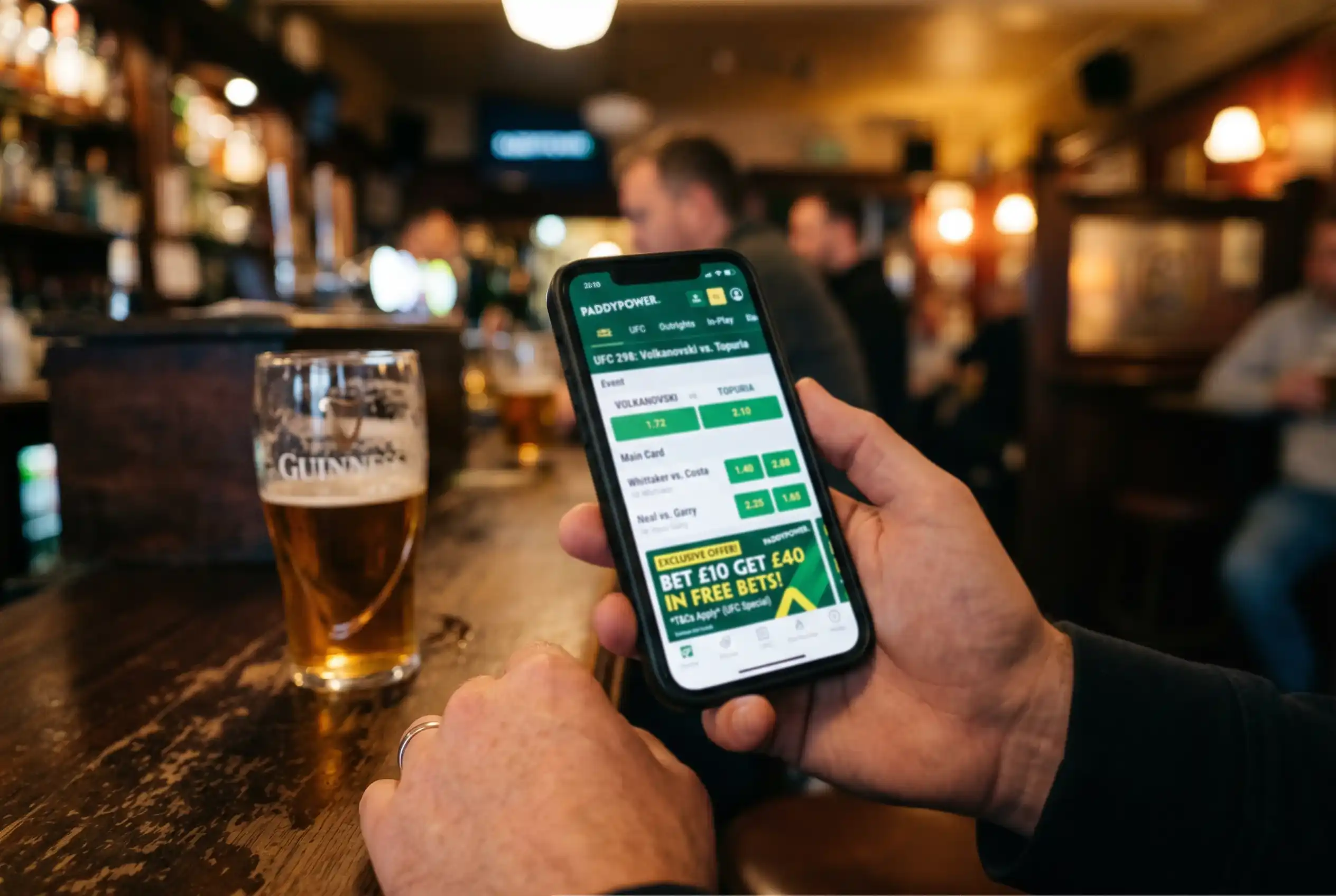
I tested five UK sportsbook apps side by side during a Fight Night last year — same Wi-Fi connection, same fight, stopwatch on each one. The fastest app reopened markets in eight seconds after the round break. The slowest took nearly forty. In a sport where a single clean shot can end the fight, thirty-two seconds of dead time is an eternity. Mobile devices process 80% of all online bets globally, and on fight night that percentage is almost certainly higher because UFC cards run late in the evening when most punters are on the sofa with a phone, not at a desktop.
Speed breaks down into two components: how quickly the app reopens markets after a suspension, and how frequently the live odds refresh during active fighting. The first determines whether you can act on between-round observations. The second determines whether the price you see on screen is the price you actually get. A platform that refreshes odds every five seconds gives you a near-real-time view; one that refreshes every fifteen seconds shows you a price that may already be stale by the time you tap it.
Market depth — the range of in-play markets available — varies significantly across UK platforms. Some offer only moneyline and total rounds during a live UFC fight. Others add method of victory, round winner, and selected prop markets for main events. The largest operators tend to offer the deepest live market coverage because their trading teams can manage the risk exposure across more outcomes simultaneously. Smaller sportsbooks often limit in-play UFC to the basics because they lack the specialist MMA traders needed to price exotic markets in real time.
The Gambling Commission’s own data shows that 95% of online gambling in the UK happens from home, and 76% of the 18-to-24 age bracket uses mobile phones for their betting. Andrew Rhodes, then the Commission’s CEO, noted that consumer staking does not necessarily track with inflation — individual bet sizes tend to remain stable even as prices rise elsewhere. That behavioural pattern is relevant for live betting because it means the average in-play stake is relatively consistent, and sportsbooks can predict their exposure with reasonable accuracy. For punters, the takeaway is that platform choice matters as much as fight analysis when it comes to live UFC betting. The best read in the world is worthless if your app is too slow to execute it.
My personal setup: I keep two apps open during any UFC card. One is my primary platform with the deepest markets and fastest refresh. The other is a backup with competitive odds that I switch to when the primary suspends a market I want to access. It doubles the screen time and halves the missed opportunities.
For the fastest live odds updates, trust the platforms ranked on our premier UFC betting portal.
When to Place In-Play Bets: Reading Momentum Shifts
There is a moment in almost every UFC fight where the live odds have not caught up with what your eyes are telling you. I call it the lag window, and it usually lasts between five and twenty seconds after a significant shift in fight dynamics. The sportsbook’s algorithm needs time to process the new data — a takedown, a visible cut, a fighter visibly slowing — and during that window, the price on your screen still reflects the old reality.
The highest-value timing windows in live UFC betting tend to cluster around three situations. The first is the opening thirty seconds of a fight when a fighter’s stance, movement pattern, and range management reveal their game plan. A southpaw who switches to orthodox early, or a wrestler who immediately pressures the fence, tells you something the pre-fight odds did not account for. The second is the inter-round break after a round where one fighter clearly dominated but did not finish. Sportsbooks adjust, but they rarely adjust enough after a single lopsided round because the trading model hedges against a reversal. The third is the midpoint of a three-round fight — midway through round two — where cardio patterns become visible. A fighter who threw ninety strikes in round one and drops to forty in round two is fading, and the live price often underweights that decline.
UFC stages 42 to 43 events annually, and each card runs anywhere from five to fourteen bouts. That means hundreds of individual momentum shifts per year across the schedule, each one a potential entry point for a live bet. The skill is not in betting every shift but in recognising which shifts carry genuine predictive weight. A single flash knockdown in round one does not necessarily predict the outcome — the dropped fighter might recover fully. But a sustained grappling advantage across two rounds, where one fighter consistently controls position and the other burns energy trying to escape, is a pattern that holds up statistically.
Discipline matters here more than in any other form of UFC betting. The adrenaline of watching a live fight pushes you toward impulsive decisions — the knocked-down fighter looks done, so you slam the opponent’s moneyline at 1.20. But 1.20 implies an 83% win probability, and if the downed fighter has a history of recovering from adversity, the real probability might be closer to 70%. The live betting environment rewards punters who can separate what looks dramatic from what is actually decisive.
Cash Out During UFC Fights
Cash out is one of the most used features in live UFC betting, and one of the most misunderstood. The concept is simple: you close your bet before the fight ends and receive a payout based on the current live odds rather than waiting for the final result. If your fighter is winning, the cash-out value will be positive but less than the full potential return. If your fighter is losing, the cash-out offer lets you recover a portion of your stake rather than losing everything.
The mechanics, pricing, and strategic considerations of when to cash out — full versus partial, early versus late in the fight — deserve a deeper treatment than a single section allows. For a detailed breakdown of cash-out strategies, calculation methods, and platform-by-platform availability, see our dedicated guide to UFC betting cash out.
Risks and Limitations of UFC In-Play Betting
I have lost more money from poorly timed live bets than from any other type of UFC wager. That admission is not a disclaimer — it is a data point. Live betting amplifies every cognitive bias a punter carries into fight night: recency bias, loss chasing, and the illusion that watching the action gives you an informational edge over the sportsbook’s algorithm. Sometimes it does. More often, it just gives you the confidence to act on incomplete data.
The most significant risk in live UFC betting is latency. The odds you see on your screen are always slightly behind the real-time state of the fight. A submission attempt that you watch happening live has already been processed by the sportsbook’s feed before your app displays the updated price. You are always trading on a delay, and the size of that delay varies by platform, connection speed, and server load. On busy fight nights — UFC 300-level events with high global viewership — that delay can widen, meaning the gap between what you see and what the market has already priced in grows at exactly the moment when the most money is at stake.
Integrity is another layer of risk unique to combat sports. UFC works with IC360 — formerly U.S. Integrity — to monitor wagering activity on every event, a partnership that began in January 2023. The monitoring covers unusual betting patterns that might indicate advance knowledge of fight outcomes. While the vast majority of UFC bouts are clean, the existence of an active integrity programme tells you that the risk is real enough to warrant institutional surveillance. For live bettors, this means an awareness that sharp, unexplained line movements during a fight might reflect information asymmetry rather than fight-reading skill.
Finally, there is the risk of overactivity. A full UFC card runs eight to fourteen fights over four to five hours. The temptation to place a live bet on every bout is real, and it destroys bankrolls faster than any single bad pick. The most disciplined live bettors I know select two or three fights per card where they have a genuine pre-fight thesis that live action might confirm or deny — and they leave the rest alone. Building that discipline is harder than learning to read odds or time your entries, but it is the single factor that separates punters who survive live betting long-term from those who burn through their bankroll in a few exciting Saturday nights.
Frequently Asked Questions
Which UK sportsbooks offer the fastest live UFC odds updates?
The largest UK operators — those backed by major publicly traded groups — tend to offer the fastest live odds refresh rates, typically updating every five to ten seconds during active fighting. Smaller platforms may refresh every fifteen to thirty seconds. Testing your chosen app during a lower-stakes Fight Night card before relying on it for a major event is the best way to gauge real-world speed.
Can you cash out during a UFC fight?
Yes, most major UK sportsbooks offer cash out on live UFC moneyline bets. The cash-out value fluctuates based on the current in-play odds and may be suspended during moments of high volatility such as knockdowns or submission attempts. Not all sportsbooks offer partial cash out on UFC, so check your platform’s specific terms before fight night.
Are in-play UFC markets suspended between rounds?
Yes. UK sportsbooks typically suspend all live UFC markets during the sixty-second inter-round break while traders reassess and update the odds. Markets reopen shortly after the next round begins, though the exact timing varies by platform — some resume within eight to ten seconds, others take up to thirty seconds or more.
How does live UFC betting differ from pre-fight wagering?
Live UFC betting lets you place wagers while the fight is in progress, with odds that update based on real-time action. Pre-fight bets are locked in before the walkouts. Live markets tend to carry wider margins than pre-fight lines and offer fewer market types, but they allow you to act on information — visible fatigue, tactical adjustments, momentum shifts — that was not available before the fight began.
Written by the editors at ufc Betting Website.