Over Under Totals For UFC Round Betting
 Available in US
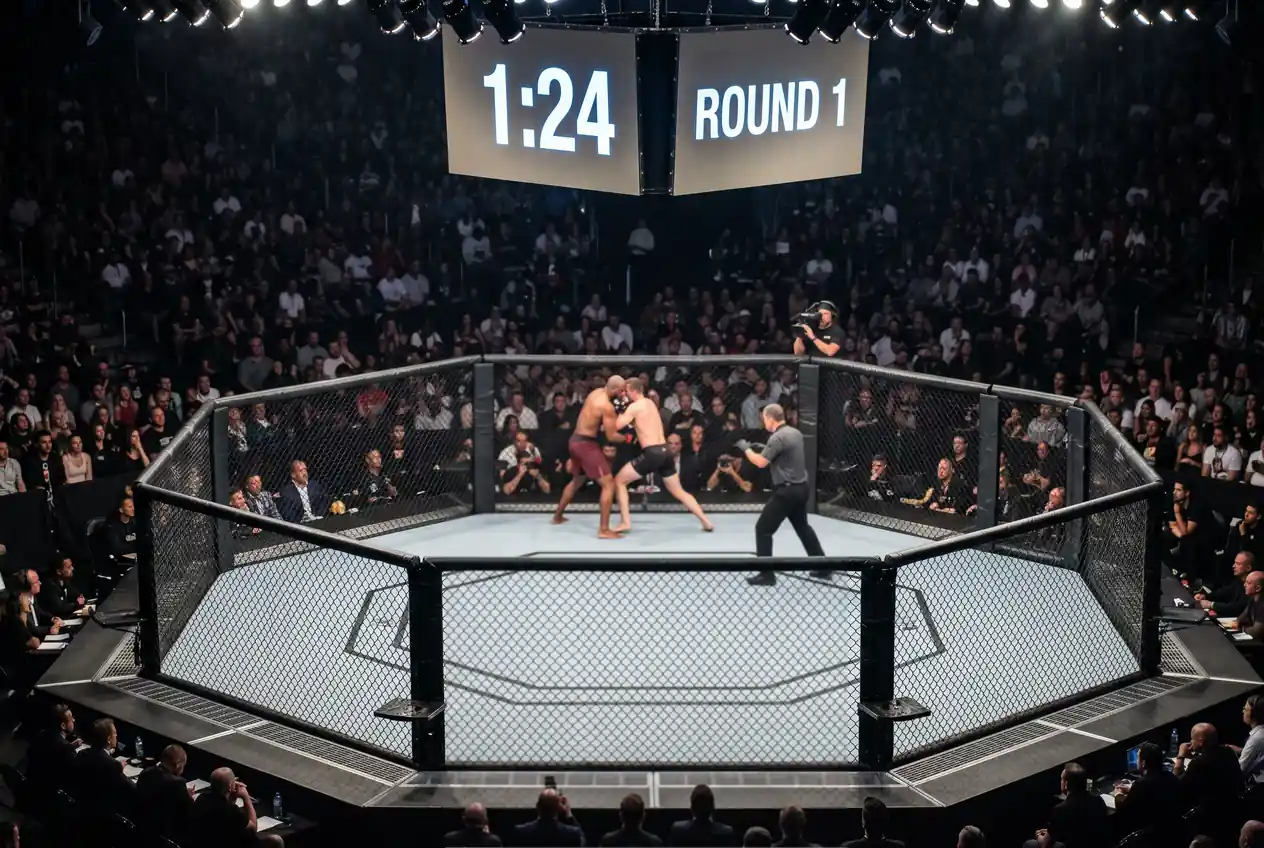
Round betting is the market that turned me from a casual UFC punter into someone who actually studies fight tape. There is something satisfying about calling not just who wins, but when – and the prices on these markets are often more generous than the moneyline because the added specificity scares off the crowds. I placed my first exact round bet in 2019 on a heavyweight fight that I was convinced would not survive the first exchange. It landed, and the odds were absurd. That single bet taught me more about UFC pricing than months of moneyline wagering.
The global UFC market is valued at $1.74 billion in 2026 with a projected CAGR of 8% through 2033, and round betting markets are growing alongside it. These are not niche bets for specialists anymore – every major UK sportsbook offers some form of round wagering on main card fights, and the depth of available markets has expanded significantly in the past two years.
UK Market Types for UFC Round Bets
Three distinct market types fall under the round betting umbrella, and understanding the differences matters more than you might think.
Total rounds over/under is the most accessible entry point. The sportsbook sets a line – usually 1.5 or 2.5 rounds for a three-round fight, or 2.5 or 4.5 for a five-round championship bout – and you bet whether the fight will last longer or shorter than that threshold. This is a binary choice, which makes it simpler to analyse and price. If you believe a fight between two knockout artists is unlikely to reach the judges, you take the under. If two grapplers with granite chins are meeting, you take the over. The 2.5-round line on a three-round fight is the most commonly offered and the most liquid.
Exact round betting narrows your prediction to a specific round. You might back “Fighter A to win in Round 2” or simply “fight to end in Round 3,” depending on the sportsbook’s format. The prices here are significantly longer because the probability of any single round being decisive is relatively low. On a typical three-round fight, exact round markets might offer odds between 6.00 and 15.00 per round, depending on the fighters involved. The tradeoff is clear: higher potential return for a much more precise prediction.
Grouped round markets sit between the two. You bet on a range – Round 1-2, Round 3-4, or Round 5 – rather than a single round. The grouping compresses the odds compared to exact round betting while still offering a premium over the total rounds market. These are particularly useful for five-round fights where you have a directional view on timing but cannot pinpoint the exact round. Backing “finish in Rounds 1-2” on a heavyweight championship bout, for instance, captures your belief in an early finish without requiring surgical precision.
Three-Round vs. Five-Round Fights: How the Market Shifts
I learned this lesson the hard way. Early in my betting career, I treated three-round and five-round fights identically when analysing round markets. They are fundamentally different beasts, and the sportsbooks know it.
Three-round fights – the standard for non-title, non-main-event bouts – are compact. The UFC schedules 42-43 events per year, and the majority of bouts on each card are three-rounders. The over/under line is typically set at 2.5 rounds, creating a clean division between fights that finish in the first two rounds and those that reach the third or go to a decision. Historically, a significant number of three-round fights go the distance, which means the over on 2.5 rounds has been a profitable long-term play in certain divisions where decision rates are high.
Five-round fights – title bouts and main events – offer a wider canvas. The over/under line shifts to 4.5, sometimes 3.5, and the exact round markets expand to cover all five rounds. The pricing dynamics change too. Championship fighters tend to be more tactical in the early rounds, which means the probability distribution shifts toward later finishes or decisions compared to three-rounders. The sportsbooks adjust their models accordingly, but the adjustments are not always accurate – five-round fight data is a smaller sample because fewer of them take place, which means the pricing can be softer.
One pattern I have noticed consistently: the under on total rounds in five-round fights tends to carry slightly more value when a power puncher is involved, because the odds reflect the average pacing of championship bouts rather than the specific matchup. When a knockout artist faces a fighter with questionable durability in a five-round main event, the under price often does not fully account for the mismatch.
How Sportsbooks Calculate Round Betting Odds
The pricing engine behind round betting is less mysterious than people assume. Sportsbooks start with historical finish rates – what percentage of fights in a given weight class end in each round – and layer on fighter-specific adjustments. A heavyweight with a 65% first-round knockout rate facing a fighter with a 40% “been finished” rate will see the Round 1 exact line priced much shorter than the divisional average.
The overround is critical here. On a six-way exact round market for a three-round fight (R1, R2, R3 finish, plus decision, sometimes split further by fighter), the total implied probability will exceed 100% by a meaningful margin – typically 15-25%. That is the bookmaker’s edge, and it is higher on round betting than on the moneyline because the complexity of the market allows the sportsbook to embed more margin without punters noticing.
Late money affects round betting lines less than moneyline prices. Sharp bettors who have inside information tend to bet the moneyline where the liquidity is deepest, which means round betting odds often reflect the opening line right through to fight night. For recreational bettors who do their analysis early, this stability can be an advantage – you are unlikely to see your chosen price evaporate before the cage door closes.
Historical Round Finish Patterns and What They Reveal
Across the UFC’s modern era, first-round finishes account for the highest single-round finish rate. That number drops progressively through rounds two and three, with a slight uptick in the final round as fighters become desperate and take more risks. In five-round fights, the pattern is similar but more spread out, with notable spikes in rounds one and five.
These patterns are not secrets – every sportsbook prices them in. The edge comes from identifying where specific matchups deviate from the trend. When two counter-strikers meet, the first round often involves cautious range-finding, which pushes the finish probability into later rounds. When a pressure fighter faces someone who fades physically, the middle rounds become the most likely finish window. Matching your round bet to the specific style matchup, rather than relying on aggregate data, is the difference between informed wagering and a guess.
The global MMA market grew from roughly $1.2 billion in 2020 to approximately $2.2 billion by 2025, and round betting markets have expanded in step with that growth. UK sportsbooks now offer round betting on virtually every fight card, including Fight Night events and prelims on numbered cards. The depth of these markets continues to improve, and the pricing – while still imperfect – is becoming more competitive as operator algorithms mature. For anyone willing to study fight tape and divisional patterns, round betting remains one of the more rewarding corners of the UFC wagering landscape.
What does over/under 2.5 rounds mean in UFC?
Over 2.5 rounds means the fight must last beyond the halfway point of the third round – roughly 2 minutes and 30 seconds into round three. Under 2.5 rounds means the fight ends before that point. This is the standard total rounds line for three-round UFC bouts.
Is round betting available on three-round fights?
Yes. Most UK sportsbooks offer total rounds over/under on all three-round bouts, with exact round and grouped round markets typically available for main card fights. Prelim bouts may have limited round betting options depending on the platform.
Are grouped round bets better value than exact round picks?
Grouped round bets offer lower odds but higher probability of winning because they cover multiple rounds. Exact round picks pay more but are harder to land. Which is better value depends on how confident you are in your timing prediction – grouped rounds are a sensible middle ground when you have a directional view but lack round-specific conviction.
Published by the ufc Betting Website team.